 Ultimate guide
How Long Does Cellulose Insulation Last? A Homeowner's Guide
Last Updated: November 24, 2026
Quick Summary
Cellulose insulation lasts about 20 to 30 years in normal service, though the treated paper fiber itself does not expire in a dry, sealed, pest-free cavity. Real-world lifespan depends on settling, moisture, roof leaks, and pest activity rather than the material's age.
- Attic cellulose performs best when the roof deck stays vented and the material stays dry and undisturbed.
- Wet cellulose compresses, loses R-value, and can support mold growth on the fiber and framing.
- Loose-fill cellulose settles over time, so measure settled depth and blow in more to reach the target.
- Pest waste is a removal trigger, not a top-up trigger, because new material hides the problem.
- You can assess your own cellulose in about fifteen minutes with a flashlight, tape measure, mask, and notepad.
Table of Contents
- How Long Does Cellulose Insulation Last?
- How Long Does Cellulose Insulation Last in an Attic?
- Cellulose Insulation Lifespan Compared to Fiberglass and Spray Foam
- Can Mold Grow in Cellulose Insulation?
- Cellulose Insulation Problems and Solutions
- Should I Remove My Old Cellulose Insulation?
- Inspecting Cellulose Insulation and Deciding Whether to Top Up, Repair, or Replace
- Scheduling a Cellulose Insulation Inspection with ThermTech Solutions
- Frequently Asked Questions
How Long Does Cellulose Insulation Last?
Cellulose insulation can perform reliably for many years when it is installed to the correct depth and stays dry, though the material itself does not decompose on a timer. The honest answer is that "how long does cellulose insulation last" has two different answers depending on what you are measuring: the durability of the treated paper fiber, and the real-world window before a homeowner needs to top up, repair, or replace it.
Material durability. Cellulose is recycled paper fiber treated with borate-based fire retardants. In a dry, sealed, pest-free cavity, that fiber does not rot, crumble, or expire. This is why some sources say cellulose lasts "indefinitely" or "decades", they are describing the fiber, not the installed assembly.
Real-world replacement timing. Service life estimates describe the installed layer, not the paper itself. Over that window, loose-fill cellulose settles, air movement deposits dust and debris, small roof leaks go unnoticed, and rodents or insects find entry points. Any one of those can cut performance well before the fiber itself is compromised.
Why the estimates conflict:
- "20-30 years" assumes normal settling and minor air movement with no major water intrusion. It is a maintenance-cycle estimate, not a failure date.
- "Decades or indefinitely" assumes the material stays dry, undisturbed, and pest-free, a best-case scenario that depends on roof, ventilation, and air-sealing details holding up.
- "Replace sooner" advice usually traces to a specific failure, a roof leak, a crawlspace with no vapor control, or pest contamination, rather than to the material's age.
The practical takeaway: do not treat any single number as universal. Use the range as a prompt to inspect, and let the condition of the material, depth, moisture, contamination, decide whether you top up, repair, or remove. The next sections cover how to check each of those conditions yourself.
Watch out: a bag label or a contractor's verbal estimate is not a lifespan guarantee. The variables that decide how long your cellulose lasts are almost all installation and moisture related, and those are inspectable.
How Long Does Cellulose Insulation Last in an Attic?
Attic cellulose holds its performance well when the material stays undisturbed and covered, which is why the attic is a common location for it. Heat rises into the attic, but a properly vented roof deck keeps moisture moving out rather than settling into the fiber.
Three attic conditions drive the real timeline:
- Ventilation: blocked soffit or ridge vents trap humid air, and trapped moisture is the leading cause of breakdown.
- Roof integrity: a small leak that never reaches the ceiling still soaks the insulation above it.
- Traffic: repeated foot traffic compresses the material and crushes the trapped air pockets that give it R-value.
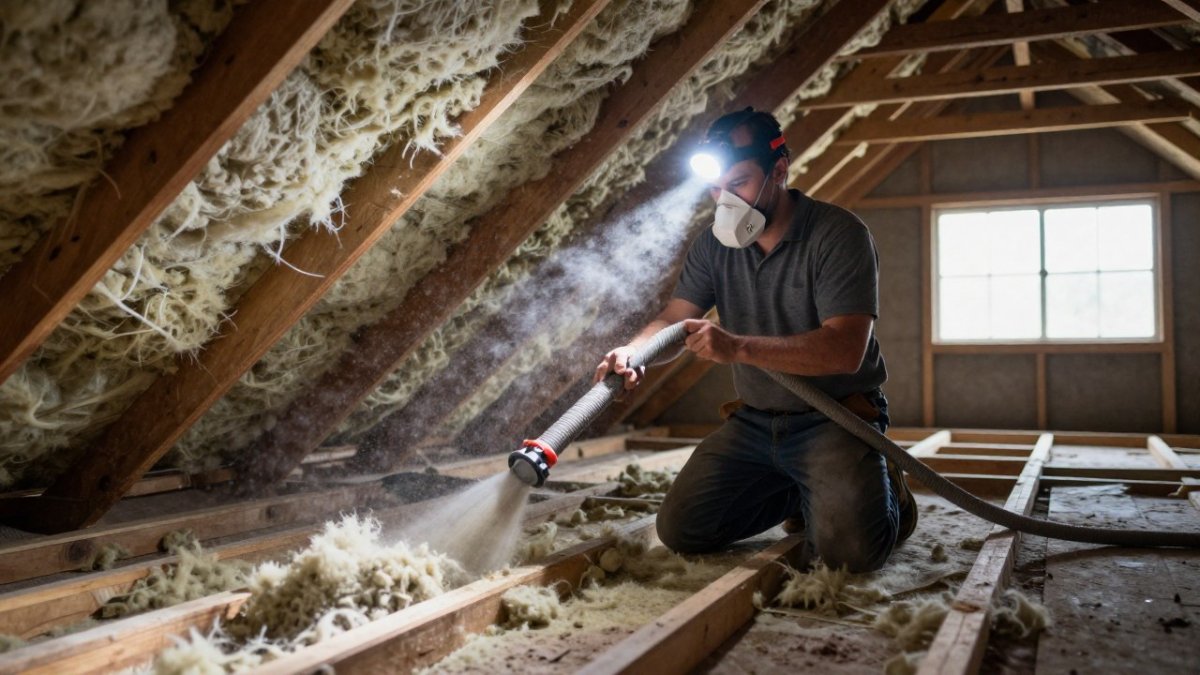
For homeowners in our service area, we treat the attic as the highest-value place to get cellulose right. If you want to see what a proper blown-in attic install involves, our attic insulation service covers options and scheduling.
Cellulose Insulation Lifespan Compared to Fiberglass and Spray Foam
Cellulose sits in the middle of the pack on lifespan, but it wins on cost and environmental footprint. Here is how the three common attic materials stack up.
| Material | Typical Service Life | Strengths | Watch-Outs |
|---|---|---|---|
| Cellulose (blown-in) | 20-30 years | Recycled content, good air sealing, borate-treated | Settles, absorbs water if exposed |
| Fiberglass (batts or blown) | 20-30 years | Does not absorb water easily, stable | Air leaks around gaps, itchy install |
| Spray foam (open/closed) | 20-30+ years | Seals air and vapor, high R-value per inch | Higher upfront cost, needs skilled install |
Can Mold Grow in Cellulose Insulation?
Mold can grow in cellulose insulation, but only when the material stays wet long enough to support it. Dry cellulose does not feed mold.
The real risk is a chronic leak or a crawlspace or attic with no vapor control. When cellulose stays saturated, it compresses, loses R-value, and can support mildew on the paper fiber and nearby wood framing.
Watch out: painting over a water stain on the ceiling without finding the source. That stain is telling you the insulation above it has been wet. For a deeper look at how moisture-resistant materials handle damp conditions, read our guide to the benefits of moisture-resistant insulation.
Cellulose Insulation Problems and Solutions
Most cellulose problems trace back to installation or moisture, not the material itself.
- Settling: loose-fill cellulose settles over time, thinning the layer and lowering R-value. The fix is measuring settled depth and blowing in more to reach the target.
- Dampness and compression: wet cellulose clumps and loses performance. The fix is stopping the leak and replacing the saturated section.
- Pest activity: rodents and insects tunnel through loose fill. The fix is sealing entry points before adding material.
- Uneven coverage: voids at the eaves and around obstructions create cold spots. The fix is a top-up with proper depth gauges.
A common mistake is adding a fresh layer over a problem. New cellulose over a wet or infested layer hides the issue and wastes money.
Should I Remove My Old Cellulose Insulation?
Old cellulose usually does not need full removal. Removal is generally the right call when the material is wet, contaminated with pest waste, or so compressed it can no longer hold R-value, and topping up is generally the better move when the old layer is dry, clean, and simply thin.
Ask these questions before deciding:
- Is the insulation damp, clumped, or stained?
- Is there visible pest activity or droppings?
- Has it settled well below the target depth?
- Is there a moldy or musty smell in the attic?
- Is the roof deck or framing showing water damage?
One "yes" usually means a targeted repair. Several means removal is worth pricing out. Removal adds labor and disposal, so it is a real cost decision. Our breakdown of attic insulation removal costs walks through what drives that number so you can weigh it against a simple top-up.
Inspecting Cellulose Insulation and Deciding Whether to Top Up, Repair, or Replace
You can assess your own cellulose in about fifteen minutes with a flashlight, a tape measure, a mask, and a notepad.
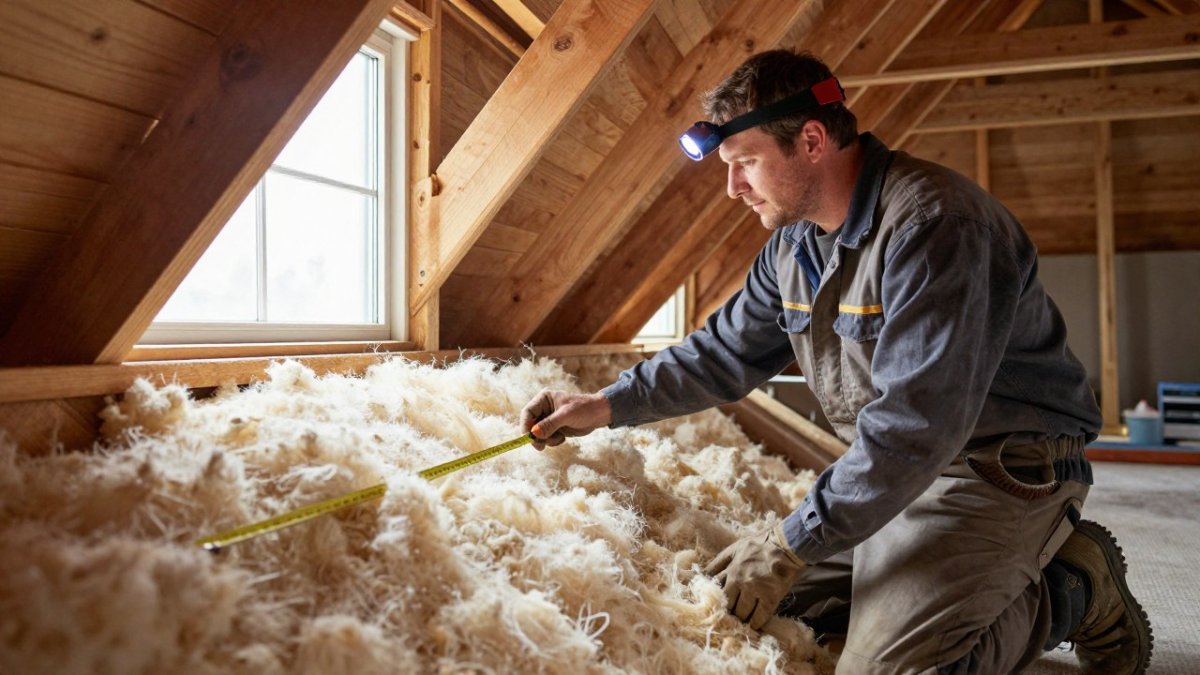
Step 1: Measure settled depth in several spots. Push the tape measure down to the attic floor (or the top of the ceiling drywall) and read the depth of the loose fill.
Step 2: Look for moisture and staining. Check the roof deck, rafters, and the insulation surface near vents, chimneys, and eaves. Dark, clumped, or matted fiber means the material has been wet. A water stain on the ceiling below is a signal that the insulation above it has been soaked.
Step 3: Check for pests and contamination. Look for rodent droppings, tunneling, nesting material, and entry points along the perimeter and around penetrations. Pest waste is a removal trigger, not a top-up trigger, because new material over contaminated fill hides the problem.
Step 4: Look for air leaks and voids. Gaps at the eaves, around recessed lights, and along the top plates let conditioned air escape and pull moisture into the assembly. Voids show up as bare patches or as fiber that has been blown away from an obstruction.
Step 5: Route the result. Use this decision logic:
- Dry, clean, and thin: top up. Add cellulose to reach the target settled depth. This is the lowest-cost fix and the most common outcome.
- Damp in one area, dry elsewhere: stop the water source first, remove and replace the saturated section, then top up the rest. Do not blow new material over wet fill.
- Pest contamination or widespread mold: remove the affected material, remediate the entry points or moisture source, then re-insulate.
- Compressed and contaminated throughout: full removal and replacement is usually the right call, and it is a real cost decision because removal adds labor and disposal.
A common mistake is adding a fresh layer over a problem. New cellulose over a wet or infested layer hides the issue and wastes money. Inspect first, then decide.
Watch out: if you find widespread mold or heavy pest contamination, do not disturb it without proper respiratory protection and eye protection, and treat removal as a containment job rather than a quick vacuum. Our cellulose blow-in service shows how material is installed to the right depth once the attic is ready.
Scheduling a Cellulose Insulation Inspection with ThermTech Solutions
A professional inspection is the most reliable way to learn whether your cellulose has useful life left or needs attention. For current pricing or a quote, contact ThermTech Solutions directly.
ThermTech Solutions offers cellulose blown insulation, spray foam insulation, and crawlspace and wall insulation for residential and commercial properties, aimed at reducing energy costs and improving indoor air quality.
If your attic insulation looks thin or you are not sure how much life it has left, do not guess. Get a clear inspection and a straightforward quote. Get started with ThermTech Solutions and restore your home's comfort and efficiency. Reach out through our contact page to schedule your visit.
Frequently Asked Questions
What are the signs that cellulose insulation needs to be replaced?
Look for settled depth well below the original install line, visible moisture staining, musty odors, pest droppings or nesting, and R-value that no longer matches your climate zone. Cellulose insulation that has been soaked and stayed wet often cannot be dried out and needs removal. If the material is dry, fluffy, and at the right depth, it usually just needs a top-up rather than full replacement.
Do mice like blown-in cellulose insulation?
Rodents will nest in almost any fibrous insulation, including cellulose, but the borate treatment in most cellulose makes it less inviting than untreated materials. The bigger issue is access: gaps around vents, soffits, and utility penetrations let mice in regardless of insulation type. Sealing those entry points matters more than the insulation itself, and pest activity is one of the main reasons cellulose insulation problems and solutions start with air sealing.
Can you add new insulation over old cellulose insulation?
Yes, in most cases. Blown-in cellulose can be topped up over existing cellulose as long as the old material is dry, free of contamination, and not compressed into a dense mat. Contractors typically measure the settled depth first, then add enough new material to reach the target R-value for your area. If there is moisture damage, mold, or pest infestation, removal comes before any top-up.
Does wet cellulose insulation need to be removed?
Usually yes. Cellulose absorbs and holds water, and once it stays damp it loses R-value, compacts, and creates conditions where mold can grow. Small damp patches from a single roof leak may dry out if the leak is fixed quickly, but saturated material in a crawlspace or a repeatedly leaking attic should be removed, the source repaired, and new insulation installed after the cavity dries.
What is the downside of cellulose insulation?
The main drawbacks are settling, moisture sensitivity, and the weight of the material. Cellulose can settle after installation, which lowers the R-value if it was not installed at the correct depth. It also absorbs water rather than repelling it, so roof leaks and crawlspace humidity have to be fixed first. Installation quality and moisture control determine how long cellulose insulation lasts.
How do I know if my cellulose insulation is still performing?
Compare the settled depth to the depth marked at installation and to the R-value recommended for your climate zone. Check for soft spots, staining, or musty smells, and look at your energy bills for a slow climb that does not match rate changes. A contractor inspection with depth measurements and a moisture reading gives you a clear answer on whether to top up, repair, or replace.