 How-to
What Attic Insulation Removal Costs in 2026
Last Updated: November 17, 2026
Quick Summary
Attic insulation removal costs vary with the insulation type, how much there is, and how easily a crew can reach the attic. Angi (2026) estimates $1 to $1.50 per square foot for removal alone, so a 1,000-square-foot attic would fall between $1,000 and $1,500. Request a quote for your specific attic to get an accurate figure.
- Angi (2026) estimates attic insulation removal at $1 to $1.50 per square foot.
- Measure the attic floor area, not the living space below, before multiplying by the rate.
- Loose-fill takes longer to vacuum than batts, which can be pulled up in sections.
- Compare quotes by scope: removal only, removal plus replacement, or with air sealing.
- Test suspected asbestos or vermiculite before anyone disturbs it, and stop work until confirmed.
Table of Contents
- What Attic Insulation Removal Costs Today
- Attic Insulation Removal Cost Per Square Foot
- Average Cost to Remove and Replace Attic Insulation
- Factors That Raise or Lower Your Removal Cost
- Estimating Your Project With a Cost Calculator
- Renting a Vacuum Versus Hiring a Crew
- Booking Your Attic Insulation Project With ThermTech Solutions
- Frequently Asked Questions
What Attic Insulation Removal Costs Today
Attic insulation removal costs vary widely. The final invoice depends on the type of insulation, how much of it there is, and how easily a crew can reach the attic. Pricing depends on quantity, access and disposal, so request a quote for your specific attic.
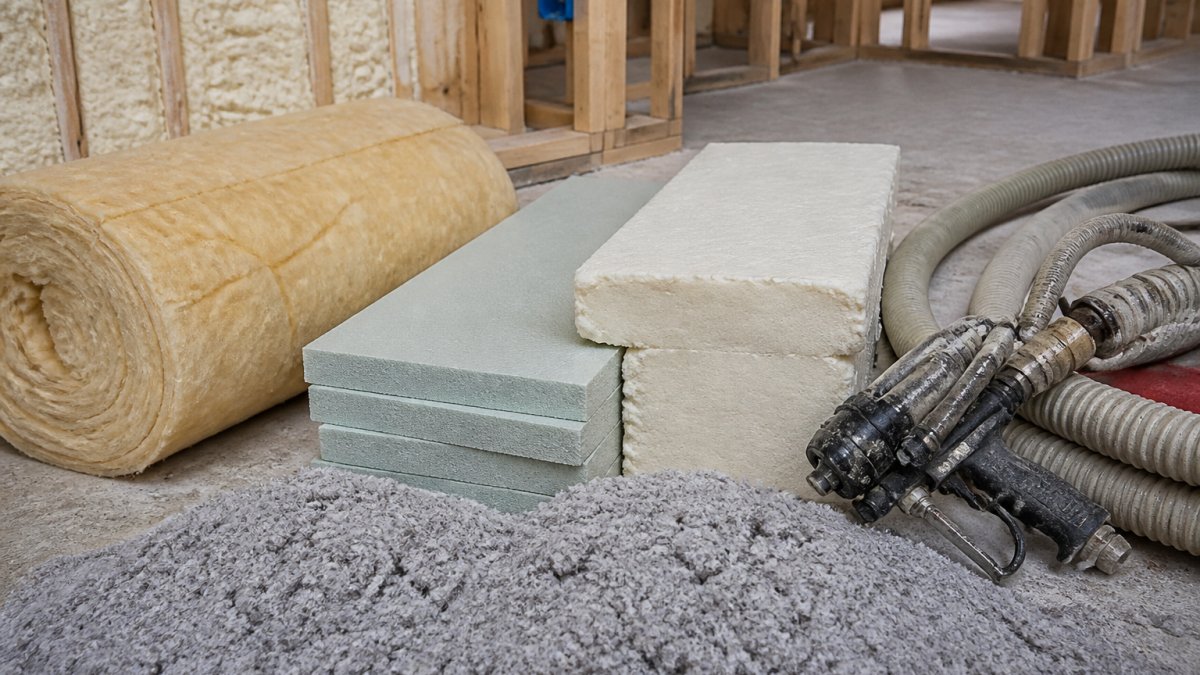
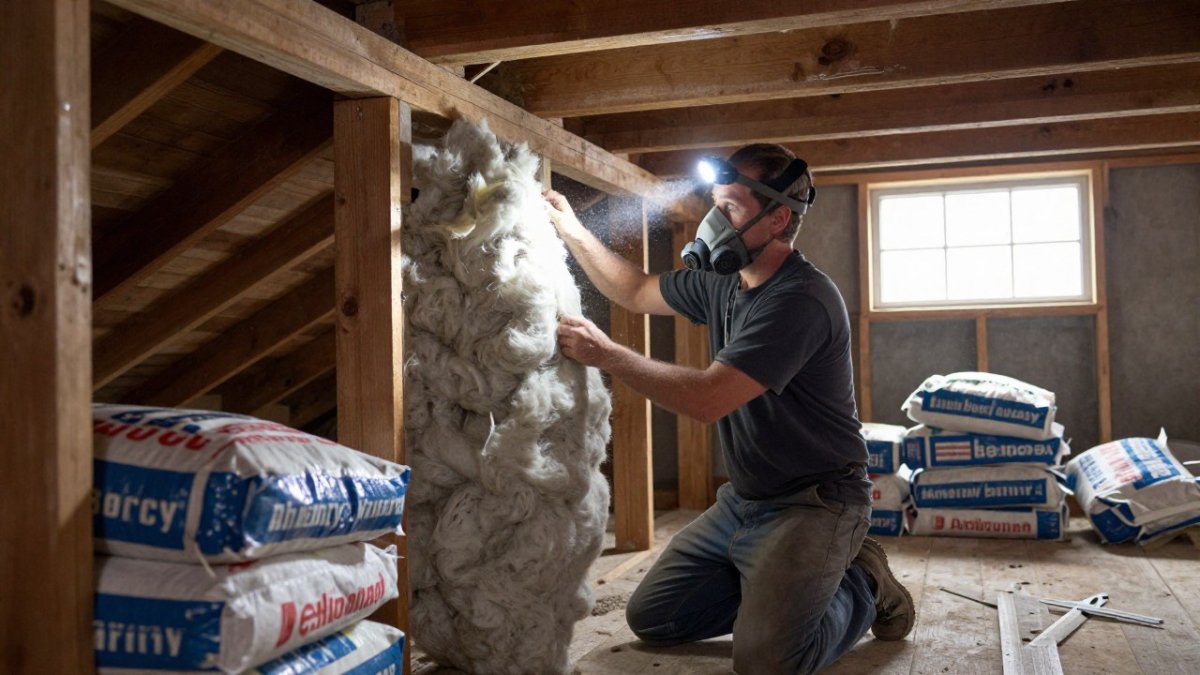
The biggest variable is accessibility. A tight attic with a small hatch takes longer than an open one, and labor time drives most of the cost. Loose-fill and blown-in materials usually take more time to vacuum out than rolled batts, which can be pulled up in sections.
The practical takeaway is simple. Expect a range, not a single number, and ask any contractor to explain what would move the price up or down.
Attic Insulation Removal Cost Per Square Foot
When removal is needed, Angi (2026) estimates attic insulation removal at $1 to $1.50 per square foot. Multiply that rate by your attic floor area to get a rough figure. A 1,000-square-foot attic, for example, would fall between $1,000 and $1,500 for removal alone under that estimate.
Per-square-foot pricing only works if you know the true floor area. Measure the attic footprint, not the living space below it, since sloped roofs and knee walls can make the two very different.
Average Cost to Remove and Replace Attic Insulation
Most homeowners pair removal with new insulation, and that combined scope is where quotes diverge the most. Removing and replacing attic insulation is priced according to the scope of work, which differs between contractors.
To compare bids fairly, separate the project into three scopes and price each one:
- Removal only. Vacuuming out old loose-fill or pulling up batts, bagging the material, and hauling it away.
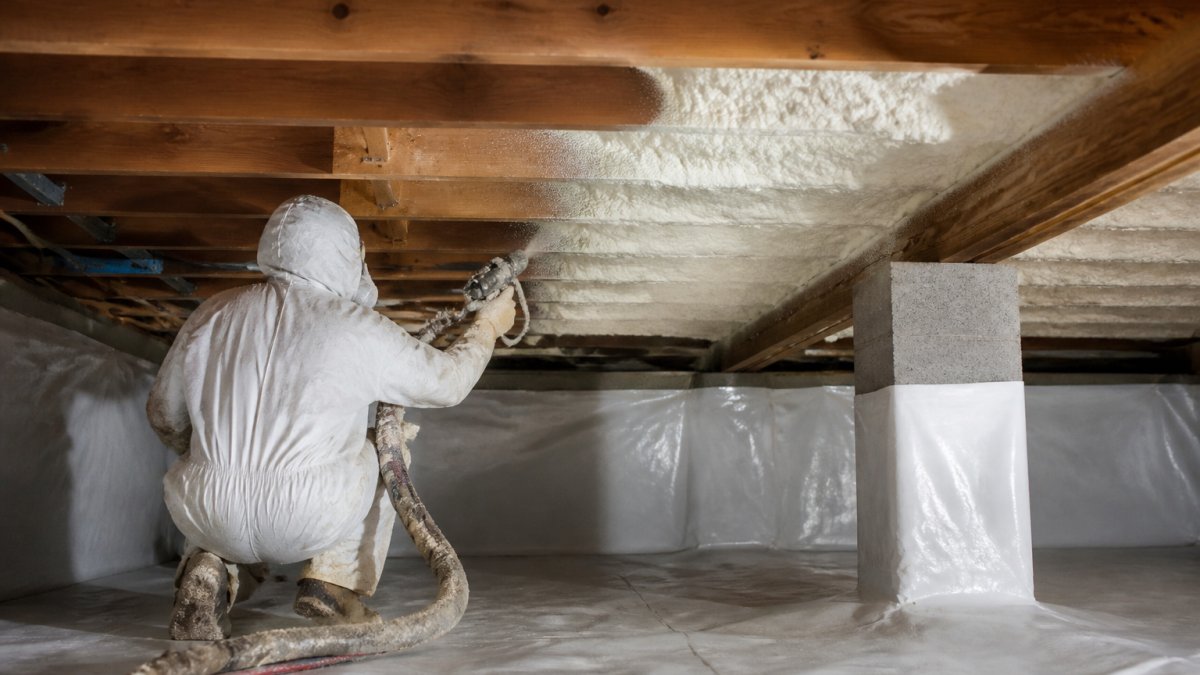
- Removal plus replacement. Removal, disposal, and installation of new insulation to a target depth or R-value.
- Removal plus air sealing plus replacement. The same as above, plus sealing gaps around recessed lights, top plates, wiring penetrations, and the attic hatch before new insulation goes in. Air sealing adds labor and materials, but it is often the step that makes the new insulation perform as intended.
Two quotes on the same attic can differ noticeably when one includes air sealing and the other does not. Ask each contractor to state, in writing, whether the quote covers removal, disposal, air sealing, baffles at the eaves, and the installed depth or R-value of the new material. A quote that lists only a total and a square-foot rate is hard to compare against anything.
Watch out: a low removal-plus-replacement bid may exclude disposal fees or assume the old insulation can stay in place under new material. Confirm what happens to the old material before signing.
Removal-Only Versus Full Replacement Scenarios
Run the same attic through both scopes before you decide. The cost of each scope depends on the insulation type, the target R-value and the condition of the existing material. If the existing insulation is contaminated, compressed, or soaked, replacement is usually the right call because new material laid over compromised insulation inherits the problem. If the old material is clean and simply thin, topping it up without removal may be an option worth pricing separately, some contractors will quote a top-up alongside a full removal-and-replace so you can see the difference.
!A contractor in a dust mask and coveralls working through an attic hatch, with old loose insulation piled on a tarp below
Factors That Raise or Lower Your Removal Cost
Several factors move the number up or down:
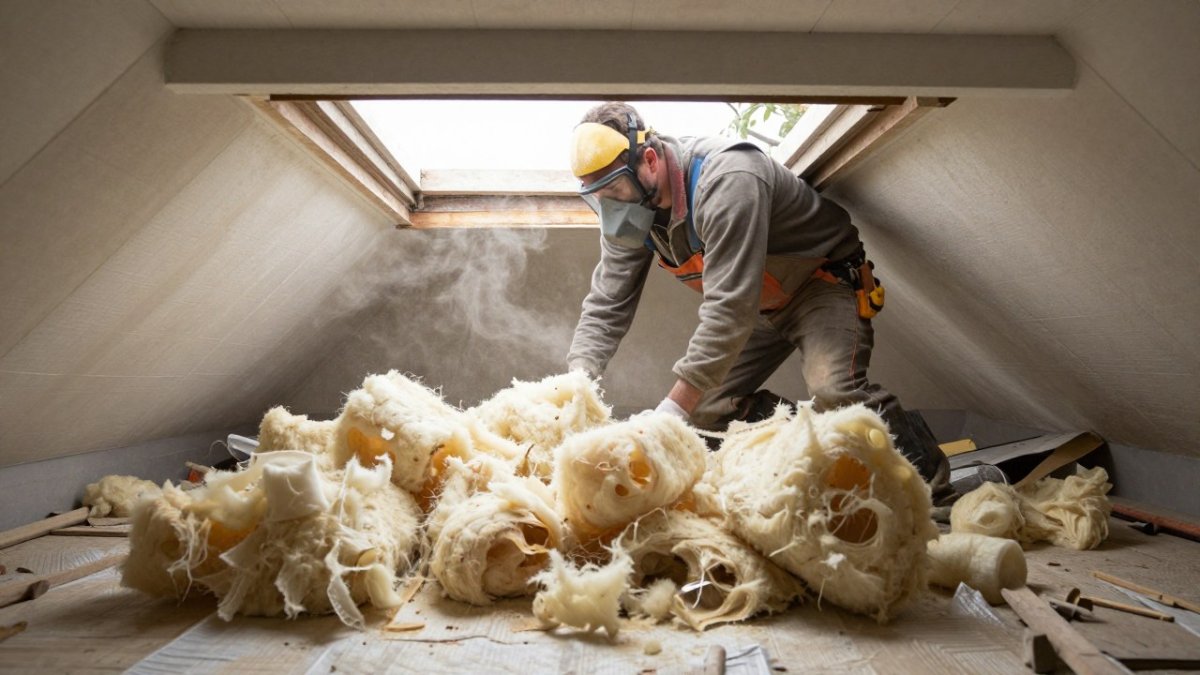
- Insulation type. Loose-fill material is slower to vacuum than batts.
- Attic access. Low, cramped or hard-to-reach spaces add labor hours.
- Attic size. Larger floor areas increase both labor and disposal volume.
- Insulation depth and layers. Multiple layers take longer to clear.
- Disposal. Hauling away old material can add to the cost.
Contaminated, Compressed and Hazardous Insulation
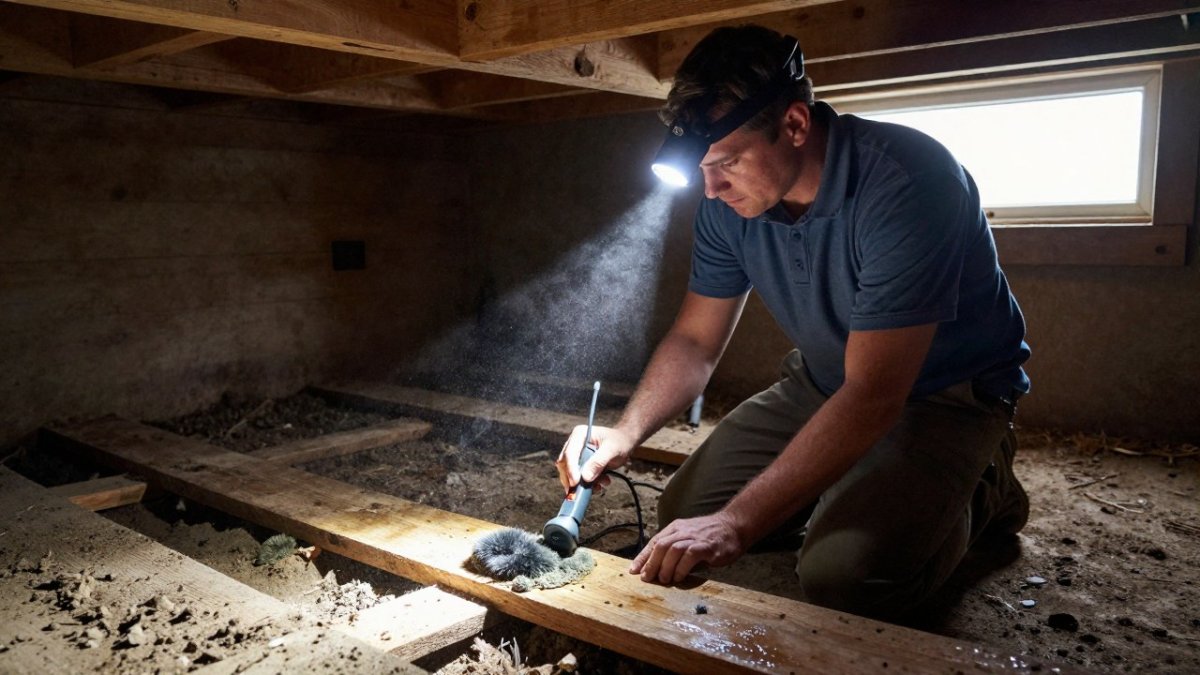
Insulation that has been compressed, soaked, or contaminated by rodents or mold costs more to handle. Crews may need protective equipment, containment, and extra cleanup time. Suspected asbestos or vermiculite should be tested before anyone disturbs it, and the work should stop until a qualified professional confirms what is present. If the material is damp or contaminated, learn how to spot signs of damp crawlspace mold before work begins. Do not try to remove suspect material yourself.
!A contractor in a dust mask and coveralls working through an attic hatch, with old loose insulation piled on a tarp below
The main variables that move removal pricing are listed below.
| Factor | Effect on cost | Note |
|---|---|---|
| Insulation type | Loose-fill takes longer to vacuum than batts | Batts can be pulled up in sections |
| Attic access | Low, cramped spaces add labor hours | Tight hatches slow the crew |
| Attic size | Larger area raises labor and disposal | More material to haul away |
| Layers and depth | Multiple layers take longer to clear | Adds vacuum time |
| Disposal | Hauling old material can add cost | Confirm whether it is billed separately |
Estimating Your Project With a Cost Calculator
A cost estimate is only as good as its inputs. To get a number you can compare against a bid, build the estimate in layers and check each layer against what a contractor quotes.
Start with these inputs:
- Attic floor area in square feet, measured at the attic floor rather than the living space below.
- Insulation type, loose-fill and blown-in versus batt, since removal time and disposal volume differ.
- Depth and number of layers, which drive how long the vacuum work takes.
- Contamination status, clean, rodent or pest waste, mold, or suspected asbestos or vermiculite.
- Access, hatch size, headroom, and whether the crew can stand or must crawl.
- Scope, removal only, removal plus replacement, or removal plus air sealing plus replacement.
A Transparent, Itemized Sample Estimate
Here is how the layers combine for a 1,000-square-foot attic with clean loose-fill insulation, average access, and a removal-plus-replacement scope. Your quote will vary with labor rates and material choice.
- Removal labor and equipment: priced according to the attic's size and scope.
- Disposal: bagging and hauling old material, typically folded into the removal rate but sometimes billed separately, ask which.
- Air sealing (optional but common): added labor and materials around penetrations and the hatch; price varies too widely to quote a single rate, so ask for it as a line item.
- New insulation material: depends on type and target R-value.
- Cleanup and protection: floor protection, containment, and final vacuuming, confirm it is included rather than assumed.
If your itemized total seems unusually high or low, recheck the inputs before trusting the number. A total that looks low can mean a scope item is missing.
How to Evaluate Contractor Quotes and Scope
Use the same line items to read every bid. A complete quote should state the attic area it covers, the insulation type and installed depth or R-value, whether disposal is included, whether air sealing and baffles are included, how contamination will be handled, and what is explicitly excluded. Two quotes that look far apart often describe different scopes rather than different prices for the same work. Ask each contractor to confirm the exclusions in writing, and treat any bid that will not itemize removal, disposal, and replacement separately as incomplete.
Watch out: a quote that lists a single rate without stating the installed R-value or disposal terms can hide a smaller scope than a competing bid at a similar price.
Renting a Vacuum Versus Hiring a Crew
Attic insulation removal vacuums are available to rent, and some homeowners take on the job to save money. Rental keeps the equipment cost down, but it also means you handle the dust, the heavy lifting, and any hazard assessment yourself. The tradeoff is labor time, physical strain, and exposure to whatever is in the old insulation.
A professional crew costs more upfront but brings equipment, containment, and experience with contaminated material. For a small, clean attic with loose, uncontaminated fill, DIY may be workable. For a large attic, compressed material, or any sign of pests, mold, or hazardous substances, we recommend hiring a crew.
Booking Your Attic Insulation Project With ThermTech Solutions
If you want a straightforward quote for attic insulation work in Liberty and the surrounding area, learn about our attic insulation services to see what we handle. When you are ready to move forward, contact ThermTech Solutions to request a quote to review the scope of your project.
Frequently Asked Questions
How much does attic insulation removal cost per square foot in 2026?
Actual pricing depends on insulation type, how accessible the attic is, and disposal fees. ThermTech Solutions provides straightforward quotes based on your specific attic, so contact us for a current estimate.
What is the average cost to remove and replace attic insulation?
The final figure depends on attic size, the insulation material, and whether contamination needs special handling. Pricing depends on quantity, access and disposal, so request a quote for your home.
Does contaminated or moldy insulation cost more to remove?
Yes. Insulation contaminated with rodent waste, mold or other debris usually takes more labor, protective equipment and disposal handling than clean insulation. Compressed or old insulation can also add time. Suspected asbestos or vermiculite should be tested by a qualified professional before any disturbance. Ask any contractor to explain how contamination is handled and whether it is included in the quote.
Can I remove attic insulation myself, or should I hire a professional?
Homeowners can remove small amounts of loose insulation, but full attic removal is physically demanding and can release dust and allergens. Removal also requires a vacuum rental and proper disposal. A professional team can complete the job faster and handle contaminated material safely. ThermTech Solutions offers same-day solutions and a certified team, so reach out for a transparent quote before deciding.