 Comparison
62 Insulation vs InsulateKY: Which Fits Your Project
Quick Summary
Choosing between 62 Insulation and InsulateKY depends on your location, materials, and project scope, since public information on both is thin. Ask each insulation contractor for an itemized, written quote covering removal, air sealing, R-value, and warranty before comparing them.
- 62 Insulation lists a Central Kentucky service area centered on Elizabethtown; InsulateKY names the Louisville area.
- Confirm each company offers the materials you need: fiberglass, cellulose, or open-cell and closed-cell spray foam.
- Request an itemized quote so removal, air sealing, and warranty terms can be compared line by line.
- Ask how the contractor verifies installed depth, since settling and gaps reduce real-world R-value.
- Verify licenses, insurance, and warranty terms in writing before signing with either company.
Table of Contents
- What the Two Insulation Contractors Offer
- Service Areas and Project Types Covered
- Insulation Materials and Installation Methods
- Experience, Credentials and Warranties
- How to Compare Insulation Quotes Fairly
- Questions to Ask an Insulation Contractor Before Hiring
- Finding an Attic Insulation Company Near Me and Booking Your Next Step
- Frequently Asked Questions
What the Two Insulation Contractors Offer
Choosing between 62 Insulation and InsulateKY starts with knowing what each one actually offers. Both are local insulation contractors, but the public information available is thin, so this section separates what each company states about itself from what you still need to confirm. At ThermTech Solutions, we think a fair comparison should do exactly that rather than repeat marketing language.
When comparing any insulation contractor, ask directly which materials and methods it offers for your project.
What to compare, offer by offer
A contractor's offer is more than a product name. Use these five dimensions to line up 62 Insulation and InsulateKY on equal terms:
- Materials offered. Confirm whether each company installs fiberglass, cellulose, and open-cell or closed-cell spray foam, or only a subset. A contractor that installs only one material may still be the right choice for that material, but you should know the limit before you call.
- Installation methods. Blown-in, batt, and spray-applied are different trades with different equipment. Ask which methods each company uses for attics, walls, and crawlspaces.
- Diagnostics before the quote. A thorough contractor assesses existing insulation depth, air leakage, and moisture before recommending a product. Ask whether the visit includes an attic inspection and a written scope.
- Removal and disposal. Old insulation often has to come out before new material goes in. Confirm whether removal, bagging, and disposal are included or quoted separately.
- Air sealing. Insulation slows heat flow; air sealing stops drafts (Energy-Efficient Home Improvement Credit Insulation and Air-Sealing Essentials). The two work together, and a quote that includes air sealing is not directly comparable to one that does not.
Pricing and quote structure
Neither company publishes prices in the information available, and both are quote-based. That is normal for this trade, but it means the quote itself is the product you are comparing. A useful quote should spell out the scope, the material and R-value, the installation method, whether removal and air sealing are included, and the warranty terms. Ask both companies for an itemized estimate rather than a single lump sum, so you can see what each line covers.
Watch out: a quote that lists only a total and a material name gives you nothing to compare. If a contractor will not put the scope in writing before you commit, treat that as a signal about how the project will be run.
A practical way to run the comparison
Call each contractor you are considering with the same short script: your address and county, the space you want insulated, the material you are considering, and whether old insulation needs removal. Write down each answer. A contractor that gives specific, written answers about scope, R-value, and warranty is giving you more to work with than one that answers in generalities.
Service Areas and Project Types Covered
Where a contractor works determines whether it can take your project at all. Based on the information available, 62 Insulation lists a Central Kentucky service area centered on Elizabethtown. InsulateKY names the Louisville area.
Project type matters as much as location. Attic, wall, crawlspace and commercial work each have different requirements, and not every contractor handles all of them. Treat any project-type claim you cannot confirm as unverified.
Ask each contractor these questions:
- Do you serve my exact county and town?
- Do you handle attic, wall, crawlspace and commercial projects?
- Will you assess existing insulation and remove old material when needed?
For a comparison that includes local coverage, you can also review our service area page to see the counties and project types ThermTech Solutions covers.
Insulation Materials and Installation Methods
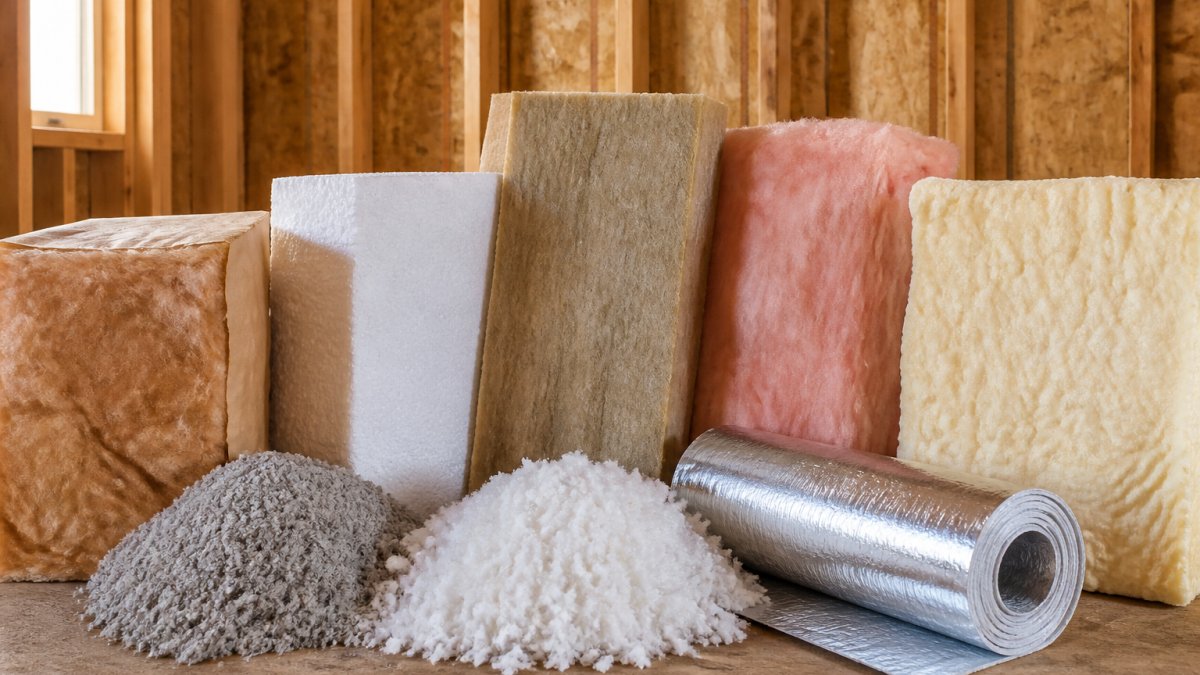
Material choice affects performance, cost, and installation method. The main options homeowners compare are fiberglass, cellulose, and spray foam. Each suits different spaces, so the right answer depends on the building, not on a single "best" product.
Fiberglass, Cellulose, and Spray Foam Compared
Fiberglass is the most familiar option and is commonly blown into attics as loose fill or installed as batts in walls and floors.
Cellulose is made from recycled paper treated for fire resistance and is also blown in. Readers weighing this option can review the details of our cellulose blow-in service before deciding. It settles into irregular spaces and around obstructions well, which makes it a strong fit for finished attics with lots of framing, wiring, and ductwork.
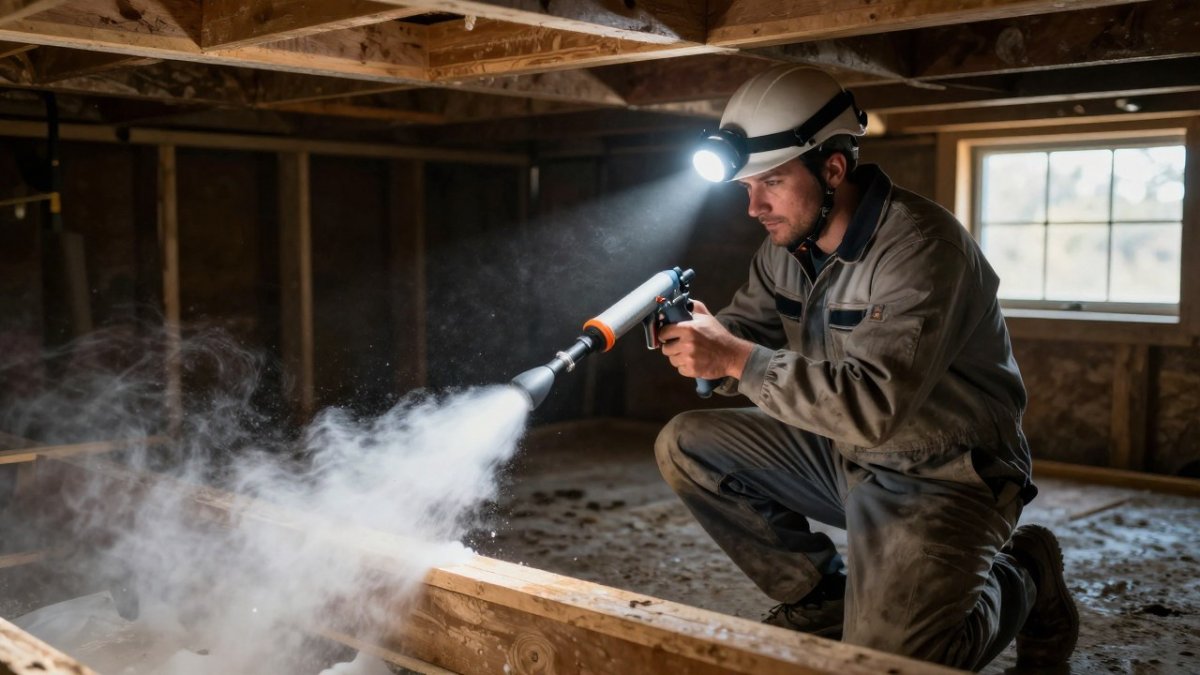
Spray foam is applied as a liquid that expands and cures in place. You can see the specifics of our open-cell spray foam service on its own page. Learn more about our closed-cell spray foam service and where it fits your project.
R-value and what it actually tells you
R-value describes resistance to heat flow (High-R Insulation). Higher R-values mean better thermal performance, but R-value is measured per inch of material, so the installed thickness matters as much as the product name. Loose-fill fiberglass and cellulose are typically installed at greater depths to reach a target R-value, while spray foam reaches similar R-values at much thinner profiles.
The U.S. Department of Energy's insulation guidance and ENERGY STAR's R-value recommendations are reliable references for the levels recommended for your climate and building. Ask each contractor which material and thickness will reach those levels in your specific space, and ask them to show the target R-value on the quote.
Matching the material to the space
- Attic floor: blown-in fiberglass or cellulose is usually the most cost-effective way to reach a high R-value across a large, accessible area.
- Walls and rim joists: spray foam or dense-packed cellulose handles cavities and air sealing better than loose fill.
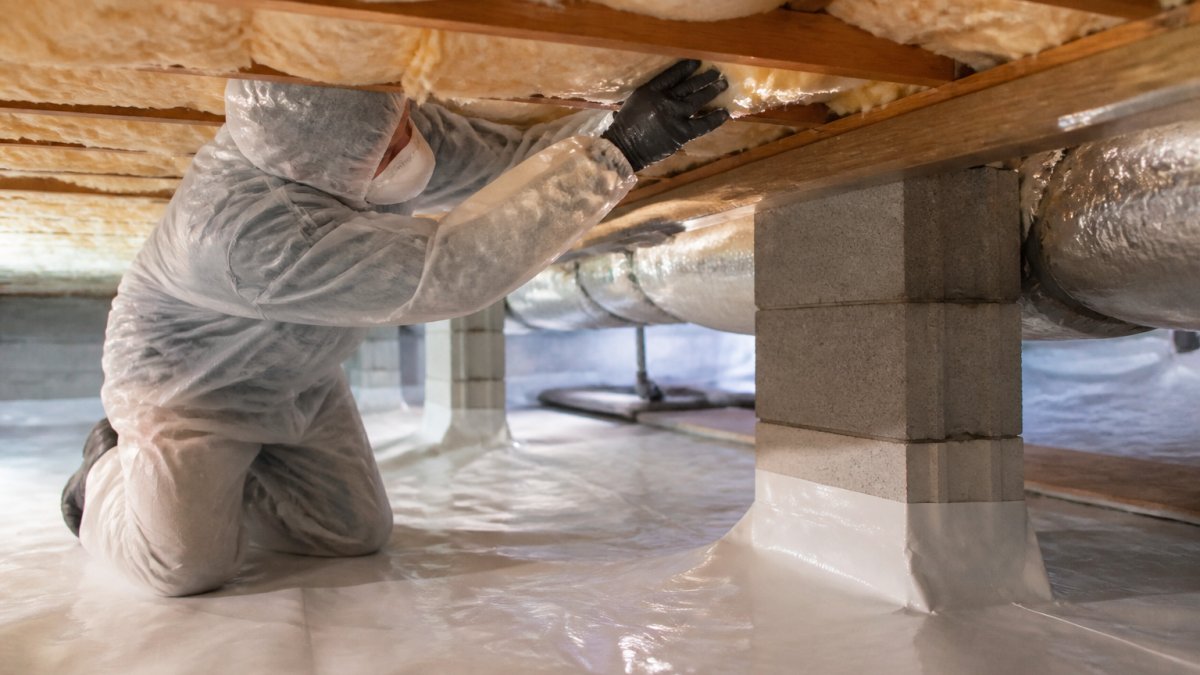
- Crawlspaces: closed-cell spray foam is common where moisture control and air sealing matter.
- Hard-to-reach or irregular areas: spray foam conforms to obstructions that batts and loose fill cannot.
Keep in mind that material pros and cons are project-specific. Cellulose works well in attics with accessible floors, while spray foam may suit crawlspaces or walls where air sealing is a priority.
Installation methods and what they change
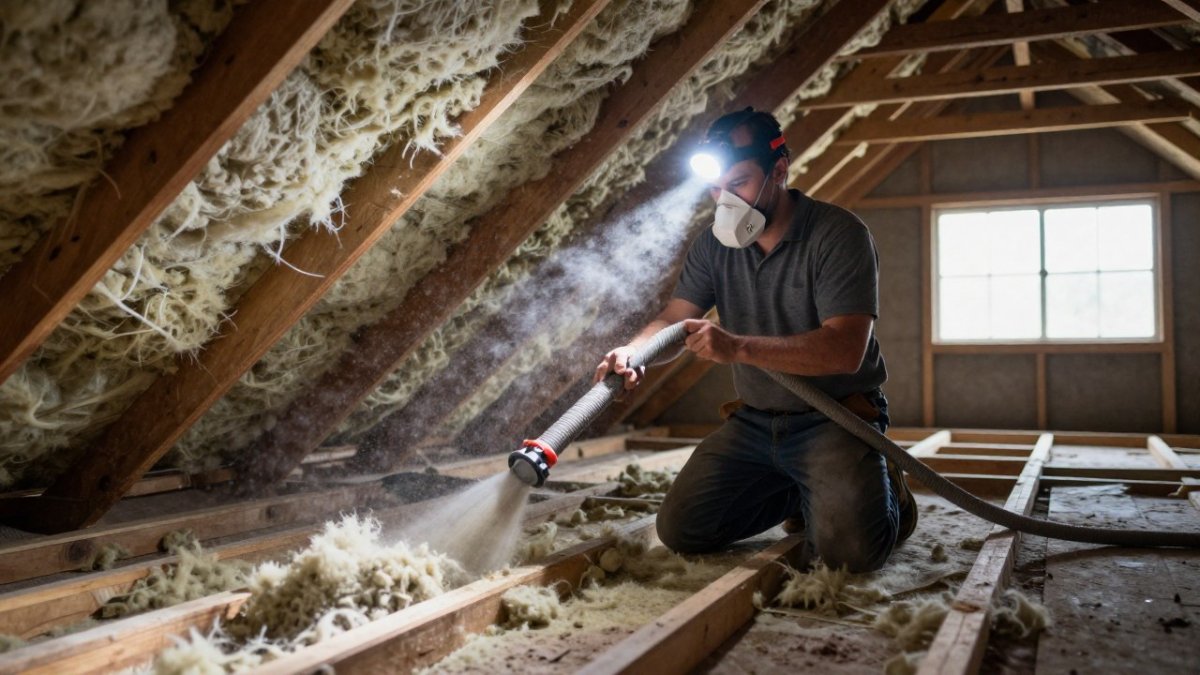
Blown-in installation uses a machine to distribute loose material evenly across an attic floor or into wall cavities through small holes. It is fast and works around obstructions, but depth must be checked after settling. Batt installation is cut and fitted by hand and depends heavily on careful fitting around framing and penetrations.
Watch out: an R-value printed on a product label is not the same as the R-value achieved in your attic. Settling, compression, gaps around framing, and missed air sealing all reduce real-world performance, so ask how the contractor verifies installed depth and coverage before the job is signed off.
The main insulation options compare as follows, using the figures and characteristics described above.
| Material | Best for | Key difference |
|---|---|---|
| Fiberglass | Attic floors and walls | Noncombustible; needs air sealing to stop air movement |
| Cellulose | Finished attics with framing and ductwork | Recycled paper; settles into irregular spaces |
| Open-cell spray foam | Lighter, vapor-permeable applications | Lighter and more vapor permeable |
| Closed-cell spray foam | Crawlspaces and rim joists | Denser; stronger moisture and air barrier |
Experience, Credentials and Warranties
Years in business and local reputation are useful signals, but they are not proof of quality. Ask any contractor for its years of experience and verify those figures independently.
Ask for proof rather than relying on claims alone. Reasonable requests include:
- Current license and insurance certificates
- Manufacturer certifications for the materials you're considering
- A written warranty covering both materials and workmanship
- References from recent local projects
Warranty terms vary. Read the warranty before you sign, and confirm whether it covers material defects, installation errors and moisture-related issues.
How to Compare Insulation Quotes Fairly
Quotes are only comparable when they describe the same work. Two contractors can quote very different totals for the same attic because one includes old-insulation removal and air sealing while the other does not.
Use this checklist to line up proposals:
- Scope: Which areas are covered, and what square footage?
- Material: Which product, and what R-value will it reach?
- Method: Blown-in, batt or spray foam, and at what thickness?
- Prep: Is removal of old insulation, air sealing or ventilation work included?
- Timeline: When will work start, and how long will it take?
- Warranty: What does it cover, and for how long?
A lower price is not automatically the better deal. A quote that leaves out removal or air sealing may cost more once those items are added. Request written quotes from both companies on the same scope, then compare line by line. Pricing depends on the project, including quantity, dates, and delivery. For current prices or a quote, contact ThermTech Solutions directly through our website.
Questions to Ask an Insulation Contractor Before Hiring
Before you choose, ask both companies the same set of questions. Consistent questions make the comparison fair.

- Are you licensed and insured in Kentucky, and can you provide certificates?
- Which material do you recommend for my space, and why?
- What R-value will the finished installation achieve?
- Does your quote include removal of existing insulation and air sealing?
- What warranty do you provide on materials and workmanship?
- How soon can you start, and how long will the job take?
- Who will be on site, and will they be trained and certified?
!A homeowner and an insulation contractor in work gloves standing together in a residential attic with a flashlight, reviewing a printed estimate
Write down the answers. A contractor who answers clearly and puts the terms in writing is giving you useful information.
Finding an Attic Insulation Company Near Me and Booking Your Next Step
If you're searching for an attic insulation company near me, start with a list of contractors who serve your county. Then compare each one using the same questions and quote checklist above. The right choice depends on your location, project type and the scope you need, not on which name appears first in a search.
Next, request a written estimate that spells out the materials, removal, air sealing and warranty. When you have two or three comparable quotes, you can decide with confidence. ThermTech Solutions serves Liberty, KY and surrounding counties with attic, wall, crawlspace and spray foam insulation, and we invite you to contact us for a transparent quote based on your project's details.
Last Updated: November 21, 2026
Frequently Asked Questions
How do I compare insulation quotes from different companies?
Ask each contractor to quote the same scope: the insulation type, the target R-value, the square footage, whether old insulation must be removed, and any air sealing included. Compare the line items rather than the total price alone. Quotes that are much lower than the others often leave out removal, prep or cleanup. Pricing depends on the project, so request written estimates from ThermTech Solutions and other contractors and compare them side by side.
Which insulation type is best for an attic?
The best attic insulation depends on the attic's design, the existing insulation and your target R-value. Blown cellulose and fiberglass are common choices for open attic floors, while spray foam suits sealed or hard-to-reach areas and can also air seal. ENERGY STAR publishes recommended R-values for homes, which give you a benchmark when you review a contractor's proposal. A contractor who inspects the attic before recommending a material is usually giving more reliable advice.
What questions should I ask an insulation contractor before hiring?
Ask whether the contractor is licensed and insured, how long they have operated, what materials they install, and what R-value they recommend for your home. Confirm the warranty terms in writing, whether old insulation removal is included, and how moisture issues in a crawlspace will be addressed. Ask who will perform the work, whether they are trained and certified, and how quickly they can schedule. Request a written estimate with a clear scope before you commit.
How do I find an attic insulation company near me?
Start by confirming that a contractor serves your county, since service areas vary. Compare a company's stated service area, years of experience and project types against your needs. Review its website for the materials it installs, then request written estimates. Contractors serving Liberty, KY and nearby counties can be compared on the same criteria, including whether they handle attics, crawlspaces, walls and commercial properties.