 blog
Commercial Insulation Services: A 2026 Guide
Table of Contents
- What Commercial Insulation Services Do
- Types of Insulation Materials for Commercial Buildings
- Insulation for Metal Buildings and Warehouses
- Commercial Insulation Cost Factors and Budgeting
- Choosing the Right Commercial Insulation Contractors
- Building Code Compliance and Fire Safety
- Energy Efficiency Gains and Long-Term Savings
- Frequently Asked Questions
Last Updated: October 11, 2026
What Commercial Insulation Services Do
Commercial insulation services involve installing, upgrading, and maintaining insulation systems across office buildings, warehouses, retail spaces, and industrial facilities. These services address the unique thermal and acoustic needs of larger structures where energy efficiency directly impacts operational budgets and employee comfort.
Commercial properties face distinct challenges compared to residential spaces. Larger surface areas, higher occupancy rates, and continuous HVAC demands mean poor insulation compounds quickly. The goal is to reduce heating and cooling costs, maintain consistent indoor temperatures, and improve the working environment.
Commercial insulation services include site assessment to identify thermal weak points, material selection based on building type and budget, professional installation, and ongoing maintenance.
Types of Insulation Materials for Commercial Buildings
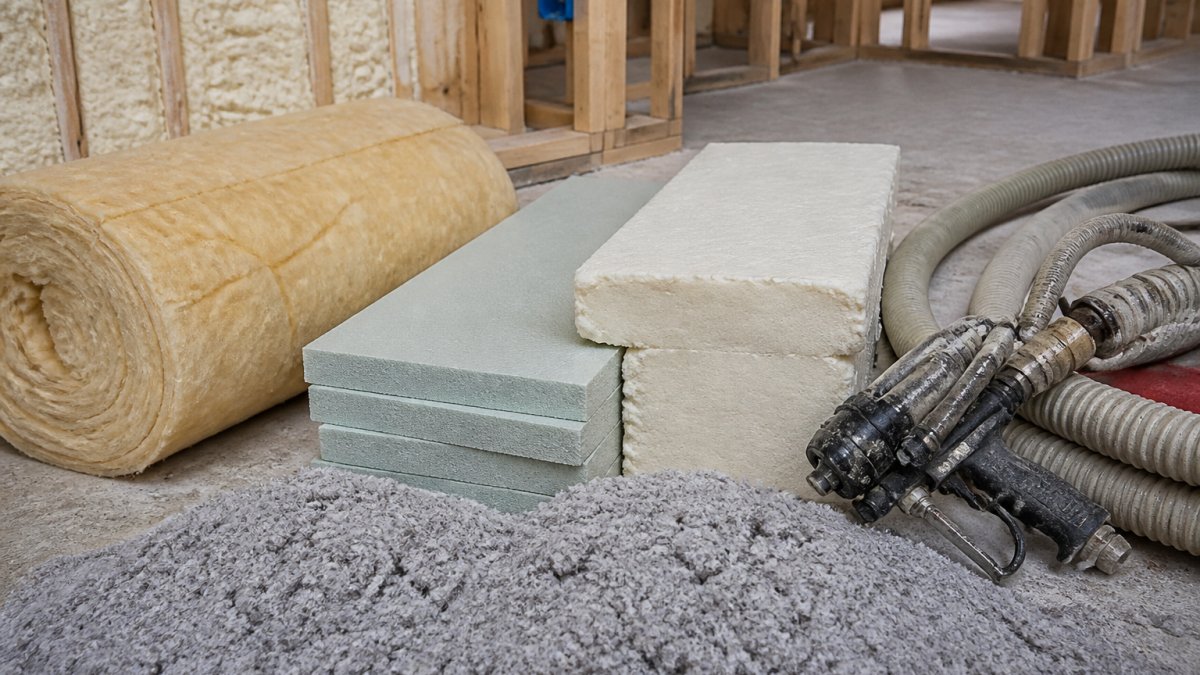
Material selection depends on building type, local building codes, fire safety requirements, and long-term performance expectations. Each material offers distinct advantages and trade-offs.
Spray Foam Insulation for Commercial Properties
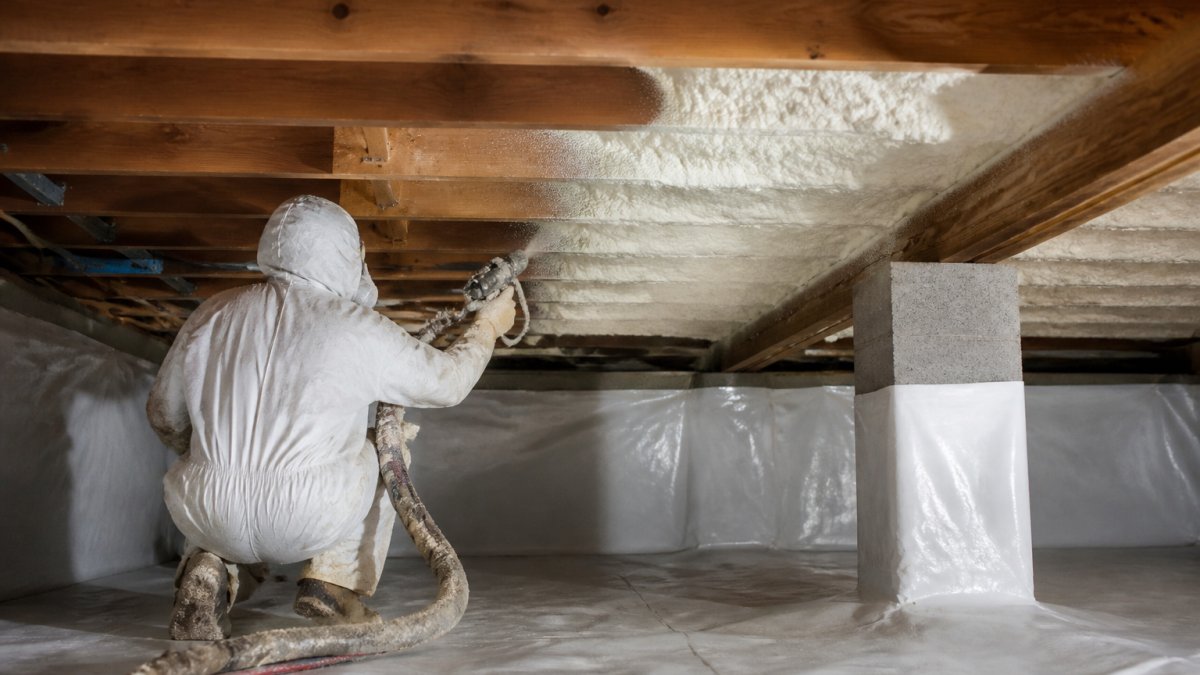
Spray foam insulation creates an airtight seal that minimizes air leakage in commercial buildings. Both open-cell and closed-cell spray foam options exist, each suited to different applications and budgets.
Open-cell spray foam is lighter and more affordable, suitable for interior walls where vapor barriers aren't critical. Closed-cell spray foam is denser, offers higher R-value per inch, and provides moisture resistance essential for warehouses, metal buildings, or humidity-prone spaces.
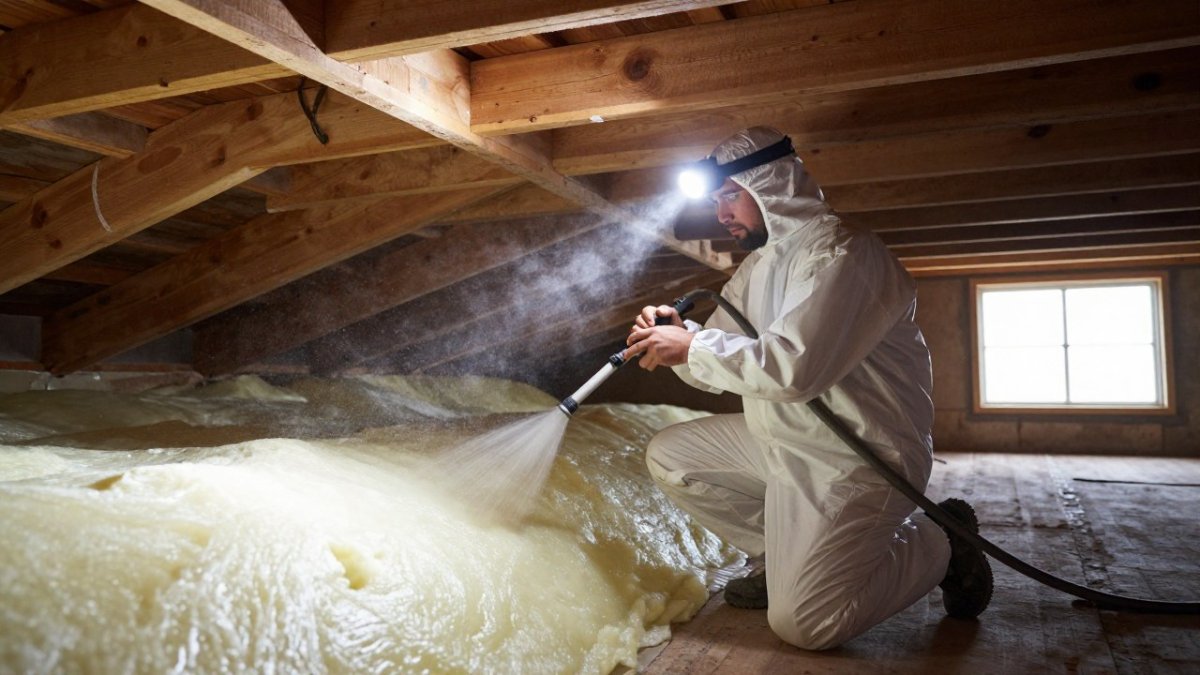
Spray foam expands after application, filling gaps and creating a continuous thermal barrier. For metal buildings and warehouses with irregular surfaces, spray foam adapts better than rigid materials.
Fiberglass and Cellulose Options
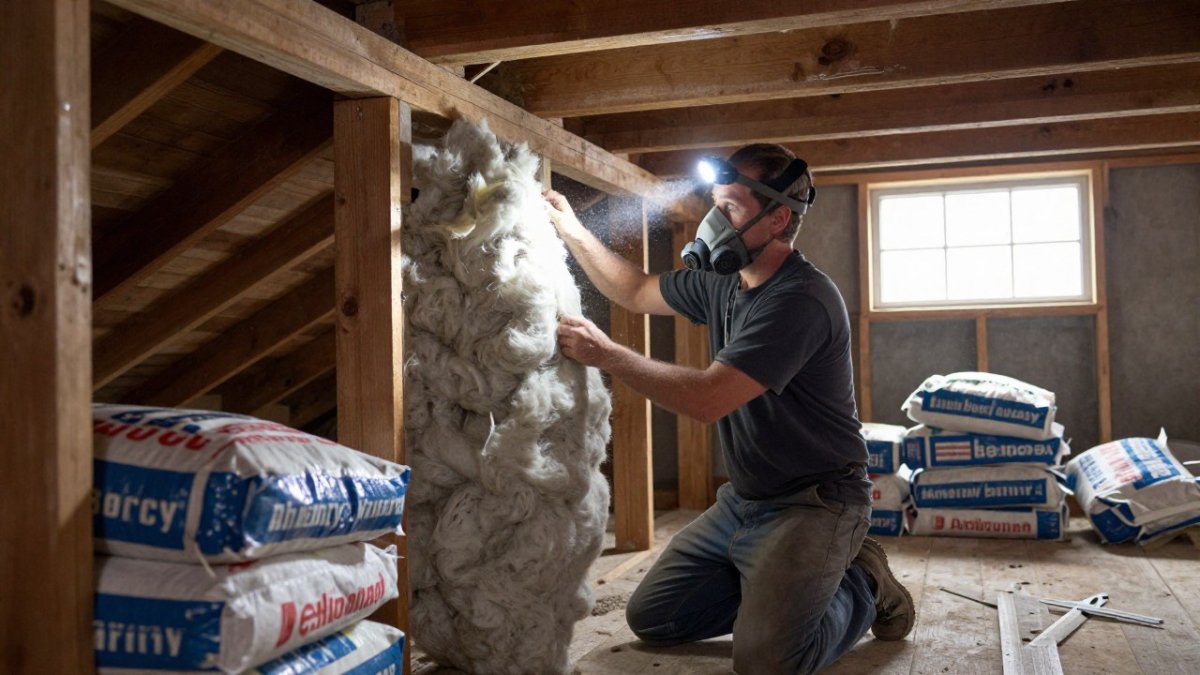
Fiberglass batts and blown-in fiberglass remain common choices for commercial properties because they're cost-effective. Fiberglass works well in standard wall cavities and attics, though proper installation is critical to avoid gaps that compromise performance.
Cellulose blown-in insulation offers higher density and better air-sealing properties than fiberglass. Made from recycled paper, cellulose settles over time, requiring careful specification. The material performs well in existing buildings where old insulation removal and new installation are necessary.
Both materials require proper vapor barriers and installation technique to prevent moisture and condensation issues in commercial settings with active HVAC systems.
Insulation for Metal Buildings and Warehouses
Metal buildings and warehouses present specific insulation challenges. Metal conducts heat rapidly, creating thermal bridging. Effective solutions combine insulation materials with proper air sealing and sometimes reflective barriers.
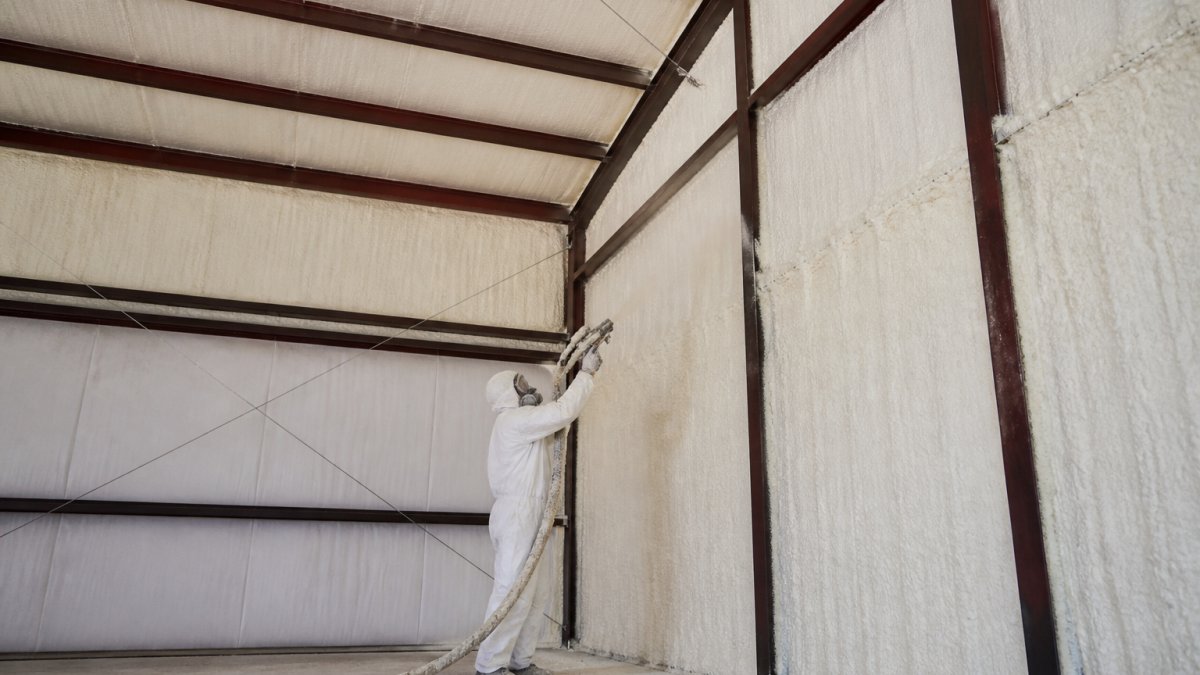
Spray foam is often preferred for metal buildings because it adheres directly to metal surfaces and seals gaps around structural elements, preventing condensation issues from temperature differences.
For retrofit projects in existing warehouses, blown-in cellulose or fiberglass work when combined with proper air sealing at penetrations and joints. Addressing thermal bridging at metal framing is critical; insulation alone won't solve this problem. Some facilities use reflective barriers to reduce radiant heat transfer.
Commercial Insulation Cost Factors and Budgeting
Insulation costs vary based on material type, building size, accessibility, and existing conditions. Successful budgeting requires understanding what drives costs for your specific project.
Material Cost Drivers
Spray foam typically ranges from $1.50 to $3.50 per board-foot installed. Open-cell spray foam costs less upfront but delivers lower R-value per inch. Closed-cell spray foam costs more but provides superior moisture resistance and higher thermal performance, making it cost-effective for metal buildings or moisture-prone environments.
Fiberglass blown-in insulation generally costs $0.60 to $1.20 per square foot installed, making it the most budget-friendly option for standard retrofits. Cellulose blown-in insulation runs $0.70 to $1.50 per square foot and often performs better in dense-pack applications, though it requires more careful specification to prevent settling issues over time.
Labor and Site Complexity
Labor represents 40-60% of total project cost in commercial settings. Retrofitting existing facilities often requires removing old insulation, addressing moisture damage, and coordinating with tenants, increasing labor time substantially. Pre-project assessment is critical to identify removal costs.
Accessibility affects labor hours directly. Ground-floor warehouse work costs less per square foot than insulating multi-story office buildings requiring lifts and off-hours coordination. Complex framing requires more spray foam application time.
Budgeting Framework
Request itemized quotes separating material costs, labor, site preparation, disposal, and air-sealing work. This allows informed trade-off decisions, for example, investing in closed-cell spray foam for a metal building's exterior while using blown-in fiberglass for interior office walls.
Consider the payback period when evaluating upfront costs. A $50,000 insulation project reducing annual heating and cooling costs by $8,000-$12,000 pays for itself in 4-6 years. Cold-climate buildings or high-occupancy facilities see faster payback.
Obtain at least three quotes from contractors experienced with your building type. Compare not just total price but material specifications, R-value targets, air-sealing scope, and warranty terms. The lowest quote is not always the best value if it specifies lower-performance materials or excludes critical air-sealing work that competitors include.
Choosing the Right Commercial Insulation Contractors
Selecting a contractor determines whether your insulation project delivers promised performance or falls short. The right contractor combines technical expertise, transparent communication, and a clear project plan that minimizes disruption to your operations.
Contractor Qualifications and Certifications
Experience with commercial properties is non-negotiable. Commercial projects involve larger scale, building code compliance, fire safety requirements, and coordination with ongoing operations. Contractors experienced in metal buildings, warehouses, or office retrofits understand these complexities.
Verify certifications specific to your chosen material. Spray foam contractors should hold manufacturer certifications. Ask contractors to provide copies of current certifications and proof of liability insurance covering commercial work.
Check references from similar projects, ideally buildings comparable in size, type, and climate to yours. Ask previous clients about timeline accuracy, whether work stayed within budget, site cleanliness during installation, and whether the insulation performed as promised after one or more heating seasons.
Project Planning and Timeline Expectations
A professional contractor begins with a detailed site assessment identifying thermal weak points, existing insulation conditions, moisture issues, and code compliance gaps. This assessment should result in a written specification detailing material type, R-value targets, air-sealing scope, and fire-rating requirements.
Timeline depends on project scope and building occupancy. New construction insulation in a 10,000-square-foot warehouse might take 3-5 days. Retrofitting while tenants occupy adjacent areas could take 2-3 weeks. A contractor should provide a detailed schedule accounting for material delivery, installation, and inspection.
Occupant disruption is critical in occupied buildings. Spray foam application produces odor; contractors should plan application during low-occupancy periods. Blown-in insulation creates dust and noise; scheduling outside business hours prevents disruption.
Quality Verification and Inspection
Ask contractors how they verify installation quality. Spray foam should be applied to specified thickness with no voids or thin spots; contractors should use depth gauges or thermal imaging to confirm coverage.
Request a final walkthrough before payment where you can inspect visible work, confirm material specifications match the contract, and verify that site cleanup is complete.
Transparency in communication and pricing separates reliable contractors from those prone to scope creep and hidden costs. At ThermTech Solutions, we pride ourselves on straightforward quotes with no gimmicks, honest assessments of what your building needs, and detailed project plans that set realistic expectations from start to finish.
Building Code Compliance and Fire Safety
Commercial buildings must meet specific fire safety and building code requirements that vary by jurisdiction and building type. Insulation material selection directly affects compliance.
Fire-rated insulation materials are required in many commercial applications. Building codes specify flame-spread ratings and smoke development ratings for materials used in walls, ceilings, and other building assemblies. Spray foam, fiberglass, and cellulose each have different fire performance characteristics that must align with local codes.
Air sealing creates another compliance consideration. While reducing air leakage improves efficiency, it must be done in ways that don't violate ventilation codes or create moisture problems. Commercial buildings with mechanical ventilation systems require careful coordination between insulation and HVAC design to maintain proper air exchange rates.
Work with contractors who understand local building codes and can specify materials that meet fire safety requirements for your building type and occupancy classification. Code violations can delay projects, require expensive remediation, or create liability issues. Professional contractors stay current on code changes and ensure all work passes inspection.
Energy Efficiency Gains and Long-Term Savings
Proper insulation reduces the energy required to heat and cool commercial spaces, directly lowering utility bills. The magnitude of savings depends on current insulation levels, building envelope condition, and local climate conditions.
Buildings with poor or missing insulation often see substantial improvements after upgrading. Warehouses and metal buildings with minimal insulation might reduce heating costs by 20-30% after a comprehensive insulation project. Office buildings with aging insulation often see similar improvements, plus benefits from reduced HVAC strain and more consistent interior temperatures.
Beyond utility savings, improved temperature control benefits occupants. Employees work more comfortably in spaces with consistent temperatures and reduced drafts. Retail and office spaces feel more professional and inviting. These comfort improvements support productivity and can influence tenant retention in commercial real estate.
The payback period varies by project. Energy-efficient buildings also command higher lease rates and resale values. Prospective tenants and buyers increasingly prioritize efficiency, making insulation upgrades a smart long-term investment.
Commercial insulation services require careful planning and professional execution to deliver the comfort and cost savings your building needs. The right material selection, expert installation, and attention to building codes make the difference between a project that performs as promised and one that disappoints. At ThermTech Solutions, we bring experience with commercial properties, transparent pricing, and a commitment to ensuring your insulation upgrade meets your actual needs. Contact ThermTech Solutions to discuss your commercial insulation project and receive a detailed assessment of your building's requirements.
| Material Type | Best For | Key Consideration |
|---|---|---|
| Spray Foam (Open-Cell) | Interior walls, standard applications | Lower cost, requires vapor barriers |
| Spray Foam (Closed-Cell) | Metal buildings, moisture-prone areas | Higher R-value, moisture resistant |
| Fiberglass Blown-In | Retrofits, attics, standard cavities | Cost-effective, requires proper installation |
| Cellulose Blown-In | Retrofits, dense packing applications | Good performance, settles over time |
According to the U.S. Environmental Protection Agency's guidance on building envelope efficiency, air sealing combined with insulation upgrades delivers greater energy savings than insulation alone. A comprehensive approach addressing both thermal resistance and air leakage produces measurable results.
Research from the Department of Energy's commercial building efficiency resources shows that commercial buildings often operate with significant insulation gaps and air leakage that upgrades can address cost-effectively.
For commercial property managers evaluating insulation options, the American Society of Heating, Refrigerating and Air-Conditioning Engineers (ASHRAE) standards provides technical guidance on insulation performance requirements for different building types and climate zones.
Frequently Asked Questions
What types of insulation work best for commercial properties?
Commercial properties typically use spray foam, fiberglass, or cellulose insulation depending on building type and budget. Spray foam offers superior air sealing and thermal performance for metal buildings and warehouses. Fiberglass batts work well for standard office buildings with framed walls. Cellulose blown insulation suits retrofit projects where existing cavities need filling. Your commercial insulation contractors will assess your building envelope, R-value requirements, and fire-safety codes to recommend the right material for your specific property.
How much does commercial insulation cost?
Commercial insulation cost depends on building size, material type, existing conditions, and labor complexity. Spray foam typically costs more per square foot than fiberglass but delivers better thermal performance and air sealing. Retrofit projects involving old insulation removal cost more than new construction. For accurate pricing on your property, request a quote from qualified commercial insulation contractors who will assess your site and provide transparent estimates based on your specific needs and building type.
How long does commercial insulation installation take?
Installation timelines vary by project scope. Small office retrofits may complete in one to two days, while large warehouse or metal building projects can take one to two weeks. Spray foam application is often faster than fiberglass installation because it requires no framing preparation. Removal of old insulation adds time. Professional contractors can give you an accurate timeline once they evaluate your commercial property's condition and size.
Will insulation reduce my commercial building's energy costs?
Yes. Proper insulation minimizes heat loss in winter and heat gain in summer, reducing heating and cooling costs significantly. Buildings with poor insulation or air leaks see energy bills 20-30% higher than properly insulated properties. Spray foam and fiberglass both improve thermal performance when installed correctly. The payback period depends on your current energy costs, local climate, and insulation type, but most commercial properties see measurable savings within one to three years, making insulation a sound long-term investment.