 How-to
Does Attic Insulation Stop Roof Leaks? The Truth
Table of Contents
- The Short Answer: Attic Insulation Does Not Stop Roof Leaks
- Roof Leak or Attic Condensation? How to Tell the Difference
- How Poor Attic Insulation Can Make Moisture Problems Worse
- Should You Replace Attic Insulation After a Roof Leak?
- How to Dry Attic Insulation After a Leak
- Attic Insulation and Ice Dams: What Homeowners Should Know
- Frequently Asked Questions
Last Updated: October 12, 2026
The Short Answer: Attic Insulation Does Not Stop Roof Leaks
No, attic insulation does not stop roof leaks. Insulation slows heat loss and improves comfort, but it cannot seal a failed roof, flashing, or vent boot. Water will keep coming in until the roof itself is repaired. At ThermTech Solutions, we tell every homeowner the same thing: fix the roof first, then think about the insulation below it.
That order matters more than most people realize.
A roof leak is a water-entry problem. Attic insulation is a heat-flow product. They solve different jobs, and mixing them up leads to wasted money and repeat damage. This guide shows you how to tell a true roof leak from attic condensation, how to dry wet insulation, and when replacement is the only safe option.
A common mistake is assuming new insulation will "seal things up." It won't. The U.S. Department of Energy guide to home insulation is clear that insulation resists heat flow, not bulk water.
Roof Leak or Attic Condensation? How to Tell the Difference
The two problems look alike from inside the attic, but they start in completely different places. A roof leak lets outside water in through a gap in the roof. Condensation forms when warm, moist air from the house hits a cold surface and turns to liquid.
Here's the practical difference: leaks show up after rain, while condensation shows up in cold weather regardless of rain.
Signs That Point to a Roof Leak
- Water stains that appear or grow during and after storms
- Damp spots near chimneys, vents, skylights, or valleys
- Ceiling stains that spread outward from one point
- Rot or soft wood along roof decking seams
Signs That Point to Attic Condensation
- Frost on roof nails or sheathing in winter
- Dark staining on the underside of the roof deck
- A musty smell that gets worse in cold months
- Damp insulation near the outer edges, not under a specific roof feature
If you see frost or widespread dark staining with no rain connection, you likely have a moisture problem, not a leak. The EPA guide to moisture control notes that controlling indoor air and moisture is key to preventing these issues.
How Poor Attic Insulation Can Make Moisture Problems Worse
Weak insulation doesn't create leaks, but it can make moisture problems worse. When attic insulation is thin, compressed, or missing in spots, warm indoor air escapes into the attic. That warm air carries moisture with it.
In cold weather, that moisture condenses on cold roof surfaces. Over time, the damp sheathing can rot, and the wet insulation loses what little performance it had.
So the relationship is indirect but real:
| Problem | What Happens | Result |
|---|---|---|
| Thin insulation | Warm air escapes upward | More condensation on roof deck |
| Air leaks at gaps | Moist air moves freely | Frost, staining, damp insulation |
| Wet insulation | R-value drops when damp | Higher energy bills, more moisture |
A common mistake is adding insulation over a moisture problem without fixing the air leaks first. That traps damp air and makes things worse.
Should You Replace Attic Insulation After a Roof Leak?
Replace attic insulation after a roof leak if it stayed wet for more than a day or two, or if it shows mold, matting, or a musty smell. Damp insulation loses its R-value and can become a health concern. In most cases, replacement is the safer choice.
Here's how to decide:
- Minor, quick-dry leak: insulation may be salvageable if it dries fully within 24-48 hours
- Soaked or compressed material: replace it
- Any sign of mold or odor: replace it
- Cellulose that got soaked: replace it, since it clumps and loses loft
The thing nobody tells you about insulation is that its performance depends on trapped air. Once that structure collapses from water, you can't fluff it back.
How to Dry Attic Insulation After a Leak
Drying attic insulation after a leak means stopping the water source first, then removing standing moisture, then circulating air until everything reads dry. Skip a step and you risk mold.
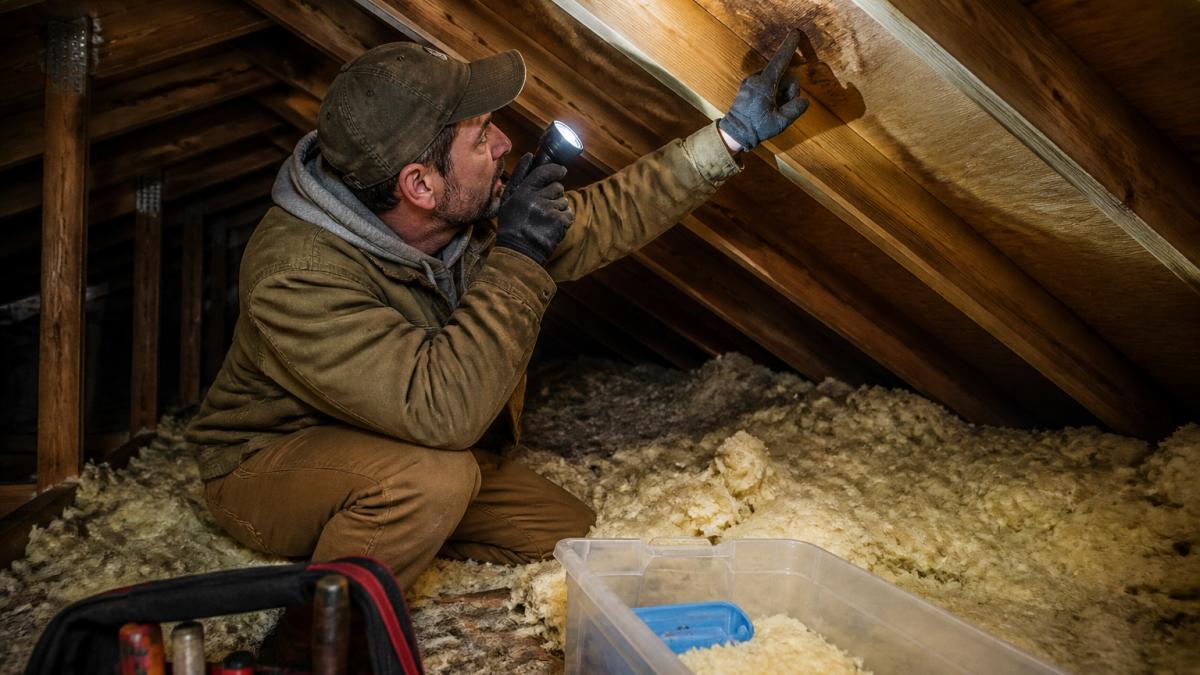
Follow these steps:
- Fix the roof first. Patch or repair the leak before anything else.
- Remove standing water. Use towels, a wet vac, or a bucket for drips.
- Pull back wet insulation. Expose the wet decking and framing so air can reach it.
- Set up airflow. Use fans and a dehumidifier to move dry air through the space.
- Check moisture levels. Don't put insulation back until surfaces read dry.
- Replace what won't dry. Discard soaked batts or clumped cellulose.
A common mistake is rushing to reinstall insulation to "finish the job." If the wood is still damp, you've just built a mold farm.
Attic Insulation and Ice Dams: What Homeowners Should Know
Good attic insulation can help reduce ice dams, but it doesn't stop roof leaks. Ice dams form when warm air melts snow on the upper roof, and that water refreezes at the cold eaves. The trapped water then backs up under shingles and leaks inside.
Insulation and air sealing keep the roof deck colder and more even, which limits melting. That's why attic insulation and ice dams are linked. But insulation alone won't fix a roof that already has poor ventilation or damaged shingles.
What most guides miss is that ice dams need three fixes together:
- Better insulation to reduce heat loss
- Air sealing to stop warm air from escaping
- Proper ventilation so the roof stays cold
The FEMA guidance on winter weather and ice dams points to heat loss and ventilation as the main drivers. Miss one, and the dams come back.
A wet attic is a problem you can't ignore, and it rarely fixes itself. If your roof has leaked and your insulation is soaked, compressed, or smelling musty, the material needs to come out before it causes more damage. ThermTech Solutions offers same-day solutions, straightforward quotes with no gimmicks, and a trained, certified team that handles attic insulation removal and replacement for homes and businesses. Get in touch with ThermTech Solutions and get your attic dry, sealed, and working the way it should.
Frequently Asked Questions
Does attic insulation stop roof leaks?
No. Attic insulation slows heat loss and can reduce condensation, but it cannot seal a hole or crack in your roof. If water is entering from outside, insulation will not stop it, and wet insulation actually loses much of its R-value. Fix the roof first, then replace or dry any insulation that got soaked.
Can poor attic insulation cause a roof leak?
It cannot cause a true roof leak, but it can cause moisture problems that look like one. When attic insulation is thin or uneven, warm air rises and condenses on cold roof decking. That condensation can drip down and stain ceilings. Sealing air leaks and adding insulation often reduces this type of moisture.
Should wet attic insulation be replaced after a roof leak?
It depends on the material and how wet it got. Fiberglass batts that dried quickly may keep working, but compressed or matted batts should be replaced. Cellulose that stayed wet for more than a day or two usually needs to come out because it clumps and loses R-value. Loose-fill insulation that absorbed water should also be replaced.
Can attic insulation prevent ice dams?
It helps, but it is not a complete fix. Ice dams form when heat escapes into the attic and melts snow on the roof, which refreezes at the eaves. Adding insulation and sealing air leaks keeps the roof deck colder and more even, which reduces ice dam formation. Proper ventilation and roof maintenance still matter too.